One Curriculum. One Standard. Three Ways to Study It.
Every member studies the same Alvará curriculum, built around the understanding of the discipline held by the Alvará Fellows. From its traditions and horsemanship through to the training of the horse and the demands of competition, the standard of study remains the same.
You can study independently, bring your work back to the College for review, or work directly with the Fellows themselves. Each membership gives you a different level of access, guidance and involvement, while keeping you inside the same curriculum and working towards the same standard.
Places for the December 2026 intake have now been allocated. Those wishing to become Members of Alvará College may register their interest for a future intake below.
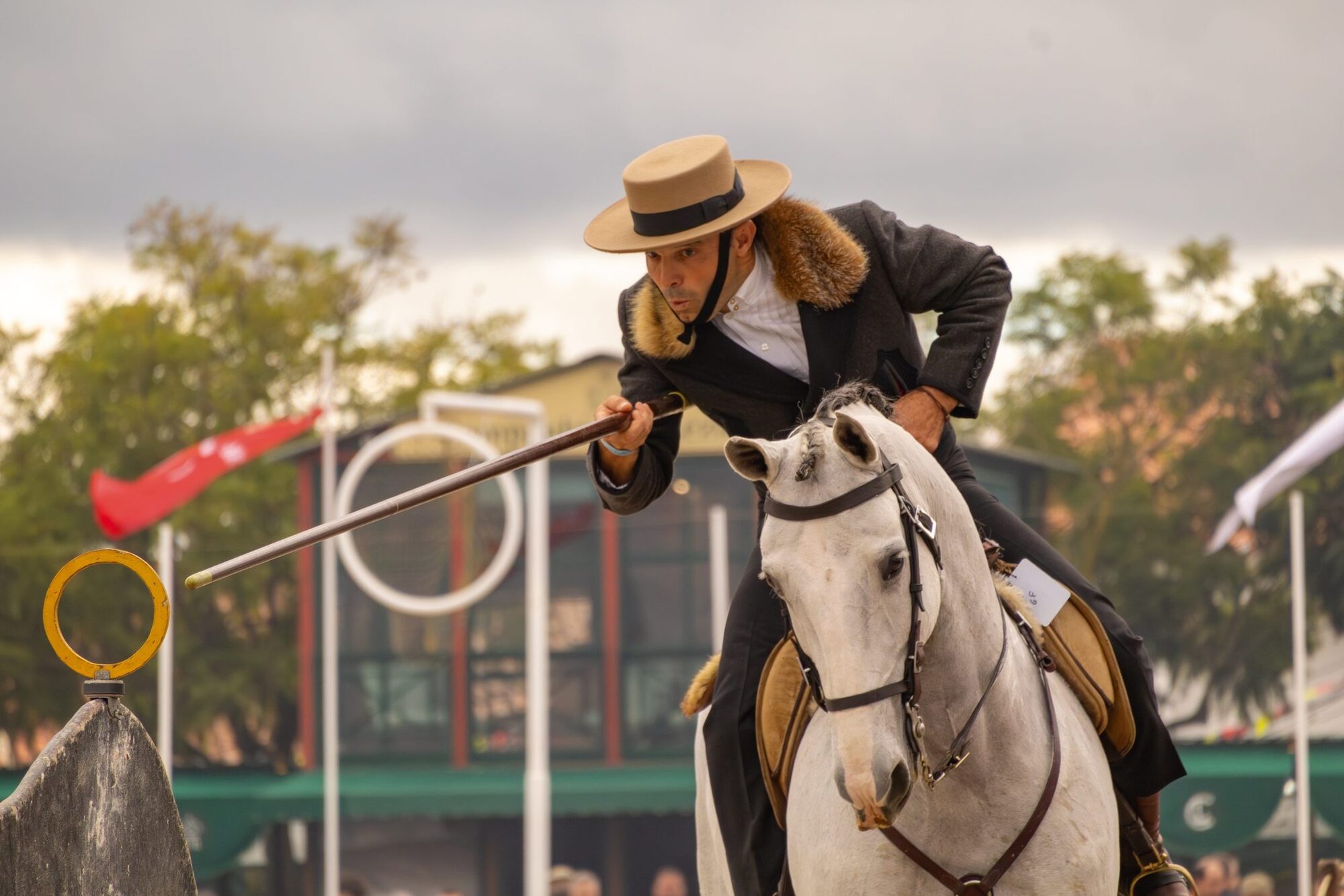
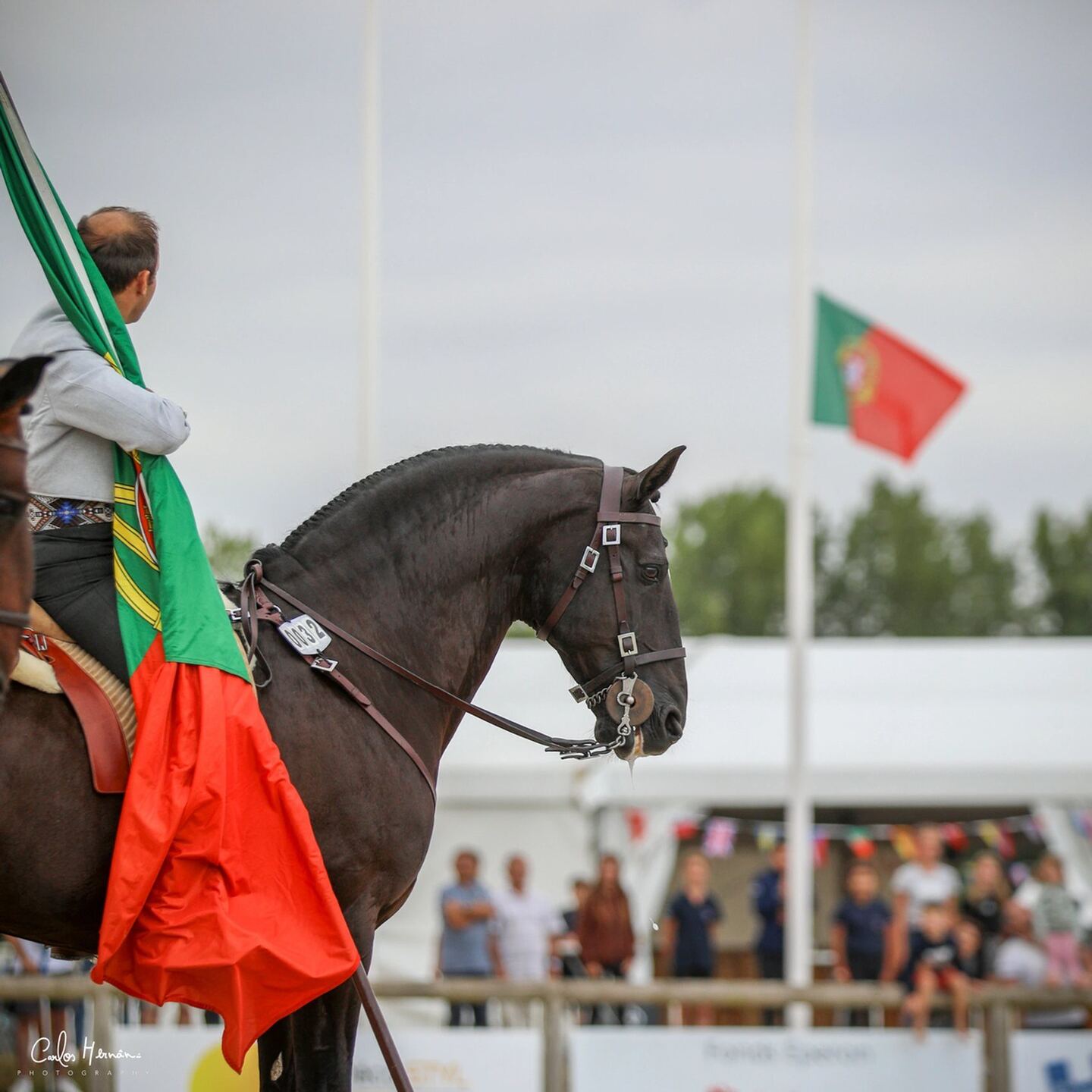
To develop riders in a much wider international field with the depth of understanding that already surrounds the discipline at its highest level. And, from that field, the World Champions of the future.
The Larger Ambition
Three Levels of Access
The three memberships give you increasing levels of access to the College, its Fellows and the opportunities that open as you progress. The curriculum, examinations and College standard are the same at every level.
Core gives you the complete curriculum and the College examination pathway. Guided adds greater involvement from the College, including examination reports, video reviews and access to Residencies as you progress. Mentored brings the Fellows directly into that process, with Fellow-led review, earlier access to some Residencies and, at the appropriate level, opportunities for training visits and competition.
Each membership builds on the one before it. The difference is the level of access you have to the College and the Fellows as you progress through the curriculum.
Core
Step I
The curriculum.
€350
per year · or €35 / month
Core is the independent route through Alvará. The Member studies the complete discipline through the knowledge and reference established by the College: what the Fellows recognise, what they look for and the principles through which they understand the work.
Members work through the curriculum in their own time, sit the examinations and build a permanent College Record of the standard they reach.
What Core holds· Four parts
- The complete curriculum - all three Branches and every Article within them.
- Every Article Examination and Branch Examination.
- The Bands - recording the standard reached through examination.
- Your College Record - holding every result permanently in your name.
Guided
Step II
The curriculum, with the College around it.
€950
per year · or €95 / month
Guided takes the same curriculum and brings the College further into the Member's education. The Member studies the Fellows' reference in the curriculum, then begins to bring their own riding back to that reference through assessment, examination feedback and live teaching.
The question develops from what should this work be? into what am I producing, what is the horse telling me, and what would a Fellow see here?
Everything in Core, plus· An additional nine parts
- Video Review Assessment - riding filmed at home and returned with written assessment from the College, connecting what the Member has studied to what is happening in their own work.
- The Examiner's Report - detailed feedback after each examination, showing where understanding is secure and where the curriculum should be revisited.
- Live Coaching with the Fellows - the opportunity to watch the Fellows work through the same questions in real time: how they read the horse, what they change, when they change it and why.
- The Journal of Working Equitation - the continuing thought, observation and experience of the College.
- The Training Residency - opening after Branch One at minimum Band C. The first opportunity to take that understanding into the founding countries and work directly with the Fellows on horses they have produced.
- The Extended Residency - opening after Branch Two at minimum Band C and one Training Residency, taking that application further through more time, more advanced work and horses proven at Masters level.
- The Instructor's Licence - opening after Branch Three at minimum Band B.
- The Applied Residency - opening after Branch Three at Band A, and forming the highest stage of the Residency Pathway.
- The path to Fellowship.
Under the Fellows · by enquiry
Mentored
Step III
The curriculum, seen more closely through the Fellows.
€3,500
per year · or €350 / month
Mentored brings the Member into the closest relationship with the Fellows and the practical and international work of the College. The reference becomes increasingly direct: the Fellows can see the Member's riding as it develops, the Member can study how the Fellows approach the same work, and questions arising from the horse, the training and the curriculum can move between the two.
The Member learns to recognise more: the preparation beneath a movement, the quality of the balance, the moment an aid needs to change, the organisation required before an obstacle and the small decisions through which fluent work is produced.
Everything in Core, plus· An additional eighteen parts
All nine Guided parts, and nine of its own:
- Video Review Assessment with the Fellows - riding reviewed and answered by the Fellows, bringing their eye directly to the Member's developing work.
- Live Coaching with the Fellows - joined live, with the Member able to follow the decisions being made as the horse is worked and ask questions from their own study.
- The Journal of Working Equitation - to read and to enter into through questions to the Fellows.
- Fellow International Training Visits - opening after Branch One at Band B, bringing a Fellow to the Member's region for in-person training alongside other riders.
- The Extended Residency - opening after Branch One at minimum Band C, taking the Member into a longer period of work with the Fellows and onto more advanced horses, including some proven at Masters level.
- Priority in practical training - from Branch Two, priority access to training with the College's leading riders.
- The Applied Residency - opening after Branch Three at Band A, bringing the Member's education together with the Fellows, Masters or international-quality horses and the full technical demands of Masters-level work.
- International Competition Opportunities - opening for Mentored Members who have completed a minimum of 90 riding days through the Residency Pathway over a two-year period and Branch Three at minimum Band B.
- Inside the international sport - opportunities to join the Fellows around leading international competitions, championships and breeding programmes, seeing the preparation, horses, decisions and standards that surround the performance in the arena.
A Member can move from Core to Guided, or from Guided to Mentored, as their study and ambitions develop.
The curriculum remains one. The standard remains one. Each Membership brings the Member into a closer relationship with the people who hold that standard and the work through which it is produced.
One Connected Body of Study
The Alvará curriculum follows the discipline in the order an accomplished rider needs to understand it. It begins with Working Equitation itself: its heritage, principles, horses, equipment, obstacles, trials and rules. It then moves into the training and riding through which that discipline is produced, before carrying the same understanding into competition.
- Rhythmical
- Precise
- Calm
- Fluent
They give the Member the same questions the Fellows carry into the work: what quality is being produced, what is changing in the horse and what decision should come next?
- Branch OneThe Discipline
- The rider learns to see the discipline through its full reference: its origins, principles, language, horses, equipment, obstacles, trials, rules and the standard by which the sport is ridden and judged.
- Branch TwoThe Horse and the Rider
- That reference moves into the saddle. The rider studies how the horse is developed towards the work, how its body is organised, how the paces and movements are prepared, how the aids are used and how increasingly difficult work is produced with precision and fluency.
- Branch ThreeThe Competition
- The same eye now turns towards performance. The rider learns to read the course, the judge, the clock and the horse together, and to understand how high-quality work is produced under the demands of Working Dressage, Ease of Handling, Speed and Cattle.
Each Branch takes the rider further while returning to knowledge already studied at a higher level of application.
An obstacle first understood through its history and rules returns as a question of balance, preparation and aids. Later it returns again as a question of line, execution, marks and time. The rider sees the same discipline with an increasingly educated eye.
The College calls this structure the Alvará Spiral™. The four Alvará Governing Principles™ — Rhythmical, Precise, Calm and Fluent — remain a constant reference throughout.
Read The Alvará Spiral →The standard stays fixed. The time it takes to reach it belongs to the individual.
Every examination and every Band becomes part of the Member's permanent College Record. An Article can be revisited, studied further and examined again, with the highest Band reached remaining on the Record.
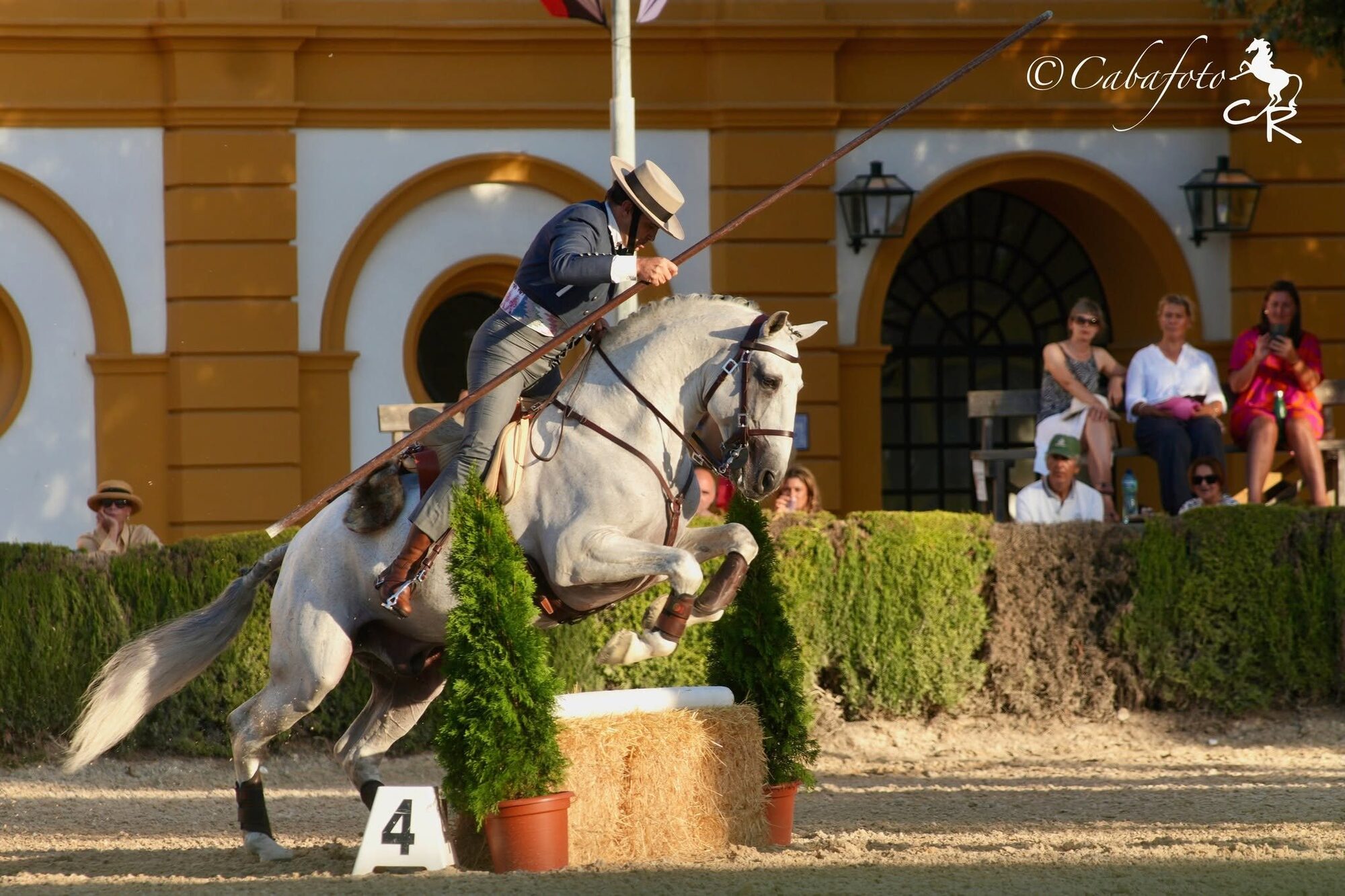
One curriculum carries that knowledge worldwide, with every Member examined against the same College standard.
The Standard the College Keeps
What Each Step Holds
Read downward. The table opens with what only Mentored holds and widens to the study every Member shares.
- Held at this step
- Opens when its standard is met
- Not at this step
| What the Membership holds | Core€350 / year | Guided€950 / year | Mentored€3,500 / year |
|---|---|---|---|
| Held at every stepThe study itself | |||
| The complete curriculumall three Branches and every Article within them | Held | Held | Held |
| Every Article and Branch Examinationone College standard, wherever the Member studies | Held | Held | Held |
| The Bandsrecording the standard reached through examination | Held | Held | Held |
| Your College Recordevery result held permanently in your name | Held | Held | Held |
| Guided and MentoredNine parts | |||
| Video Review Assessmentriding filmed at home and sent in | Not at this step | Heldreturned with written assessment from the College | Heldreviewed and answered by the Fellows |
| The Examiner's Reportwhere understanding is secure, and where the curriculum should be revisited | Not at this step | Held | Held |
| Live Coaching with the Fellowsthe Fellows working through the same questions in real time | Not at this step | Heldwatched: how they read the horse, what they change and why | Heldjoined live, with questions from the Member's own study |
| The Journal of Working Equitationthe continuing thought, observation and experience of the College | Not at this step | Heldto read | Heldto read, and to enter into through questions to the Fellows |
| The Training Residencythe first work in the founding countries, on horses the Fellows have produced | Not at this step | Opens when its standard is metopening after Branch One at minimum Band C | the practical work begins at the Extended Residency |
| The Extended Residencymore time, more advanced work and horses proven at Masters level | Not at this step | Opens when its standard is metopening after Branch Two at minimum Band C and one Training Residency | Opens when its standard is metopening after Branch One at minimum Band C |
| The Instructor's Licencecarrying the education into the teaching of other riders | Not at this step | Opens when its standard is metopening after Branch Three at minimum Band B | Opens when its standard is metopening after Branch Three at minimum Band B |
| The Applied Residencythe highest stage of the Residency Pathway | Not at this step | Opens when its standard is metopening after Branch Three at Band A | Opens when its standard is metopening after Branch Three at Band A, with Masters or international-quality horses |
| The path to Fellowshipthe highest office the College can open | Not at this step | Opens when its standard is met | Opens when its standard is met |
| Mentored onlyFour parts | |||
| Fellow International Training Visitsa Fellow travels to the Member's region for in-person training alongside other riders | Not at this step | Not at this step | Opens when its standard is metopening after Branch One at Band B |
| Priority in practical trainingpriority access to training with the College's leading riders | Not at this step | Not at this step | Heldfrom Branch Two |
| International Competition Opportunitiescompeting on Lusitanos in the founding countries | Not at this step | Not at this step | Opens when its standard is metafter 90 riding days through the Residency Pathway over two years, and Branch Three at minimum Band B |
| Inside the international sportaround the Fellows at competitions, championships and breeding programmes | Not at this step | Not at this step | Held |
The curriculum remains one. The standard remains one.
Where an opportunity opens, its stated standard must first be met. Residencies and Fellow International Training Visits are arranged through the Registrar's Office.
Every Part of the Study
Each part of the education, and the steps that hold it - open a card to read what it is.
More
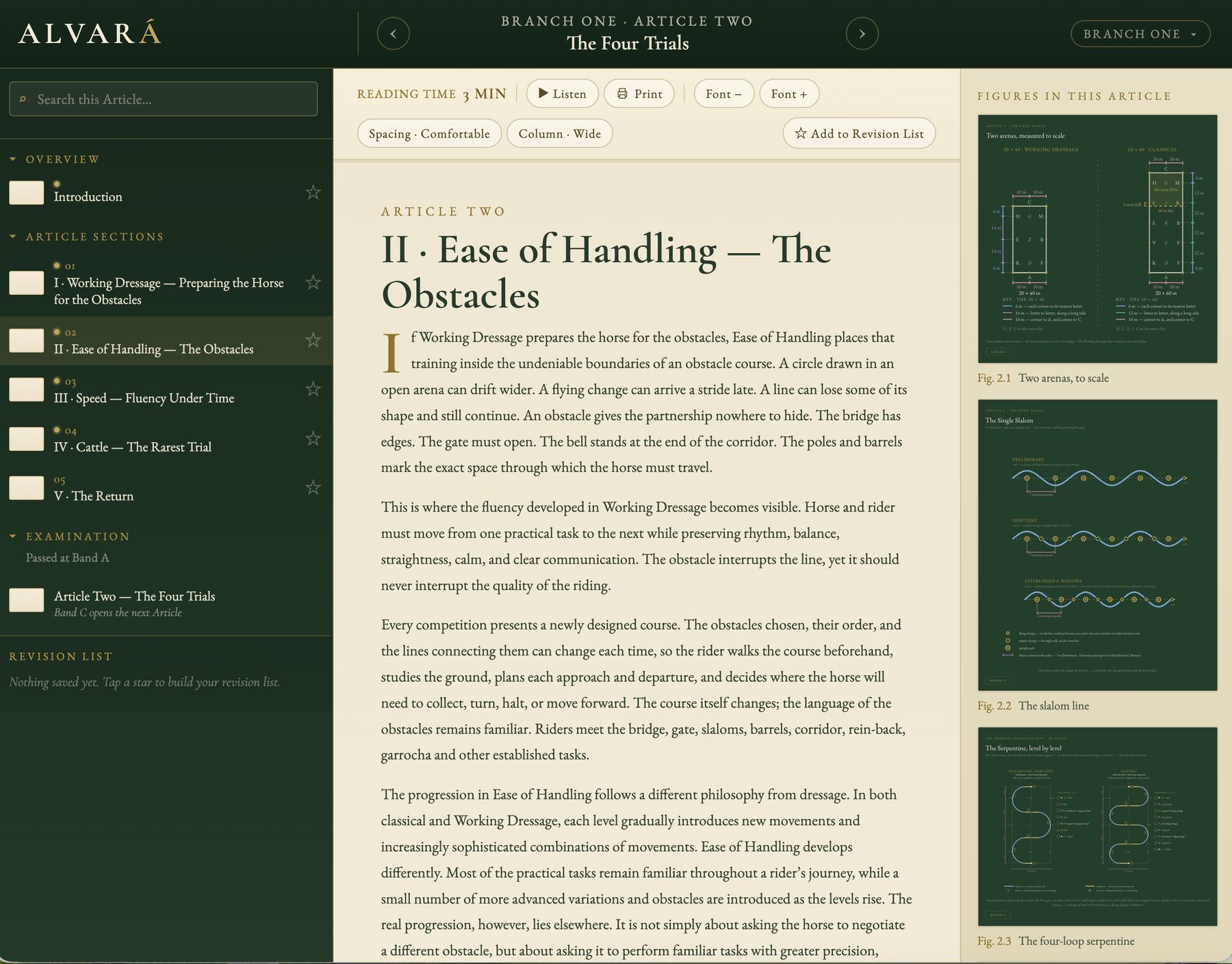
The whole discipline in writing — the three Branches (the Sport; the Horse and the Rider; the Competition) and their Articles. Every Member, at every level.
More
The fourth domain — the horse's welfare and management beyond the arena.
More
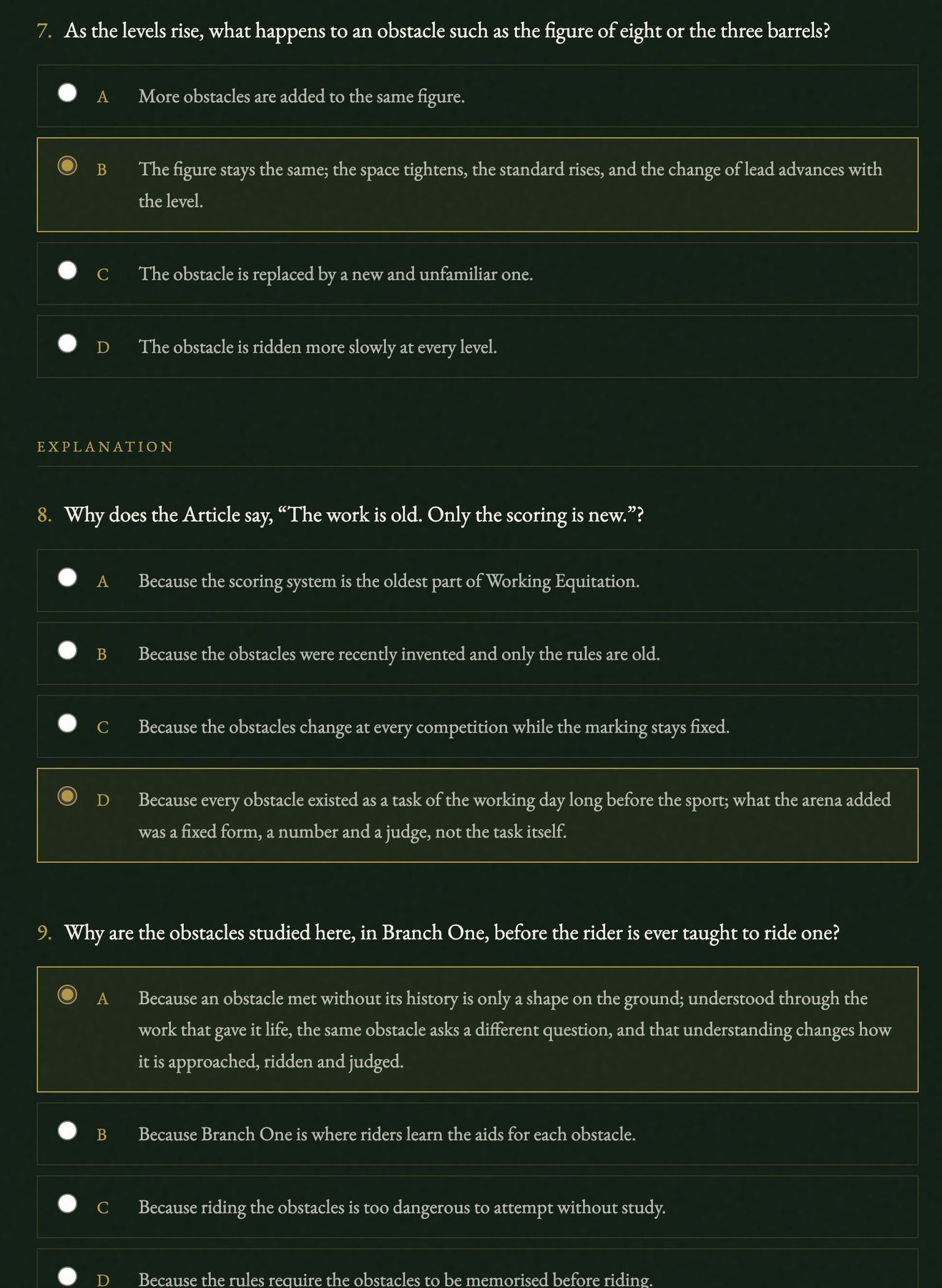
An Article Examination at the close of each Article; a Branch Examination at the close of each Branch. The questions are fixed and held by the College, one standard wherever the Member studies; sit as often as required.
More
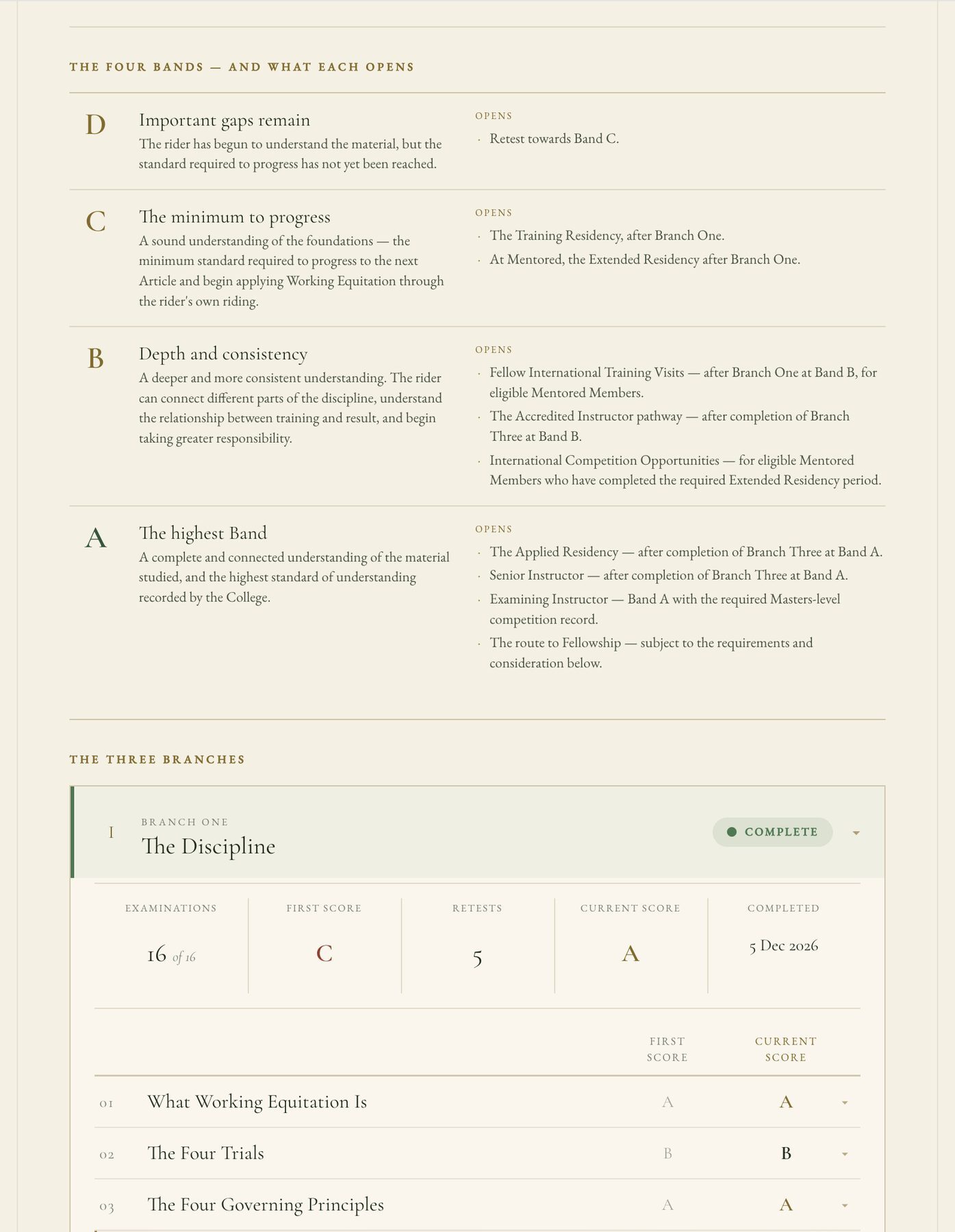
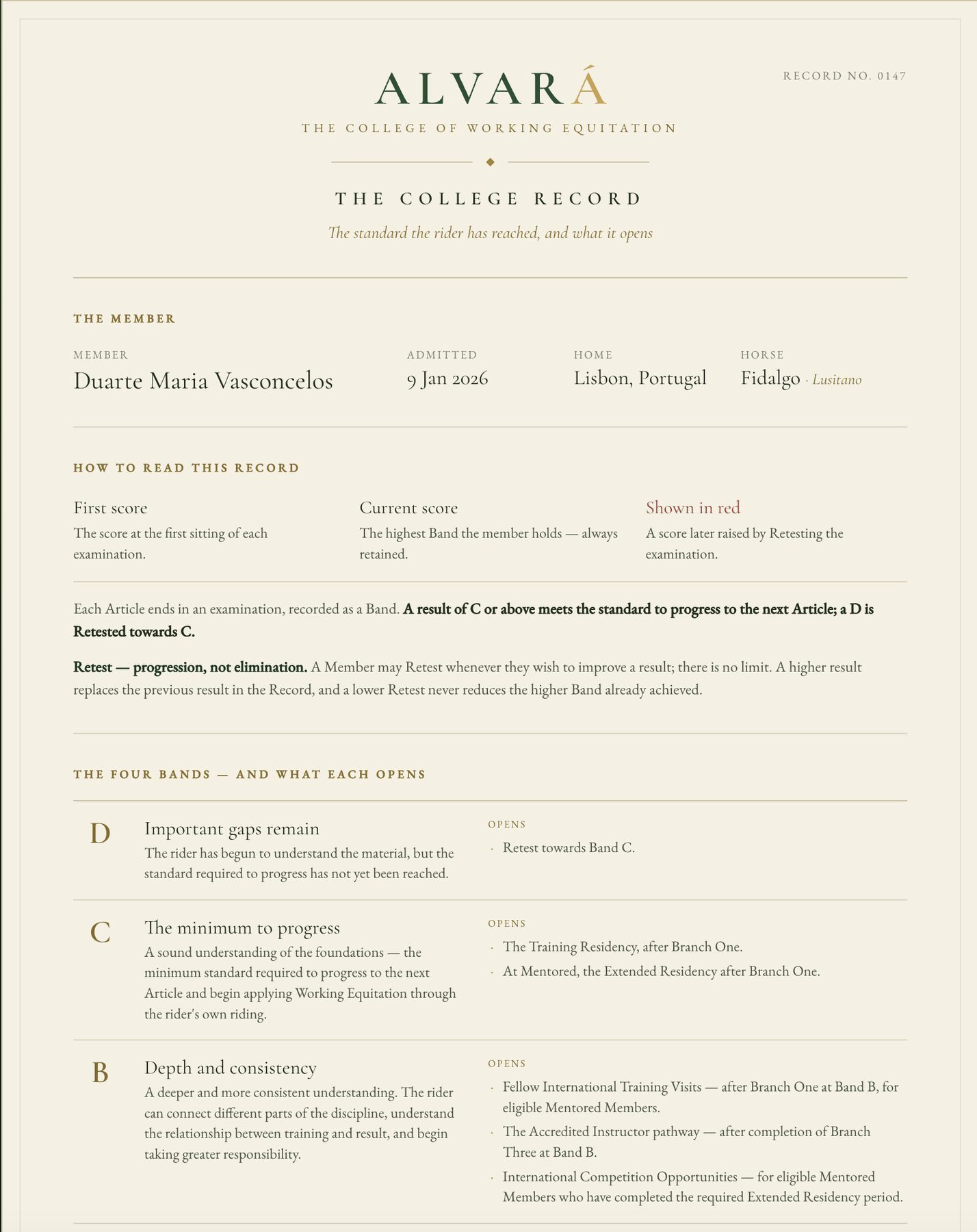
The College's four classifications — D, C, B, A — each recording what the Member holds; cumulative. Band A is the highest classification of attainment. Beyond the Bands, the Fellowship may open.
More
The permanent record of every Article Examination, every Branch Examination and every Band attained, kept in the Member's name.
More
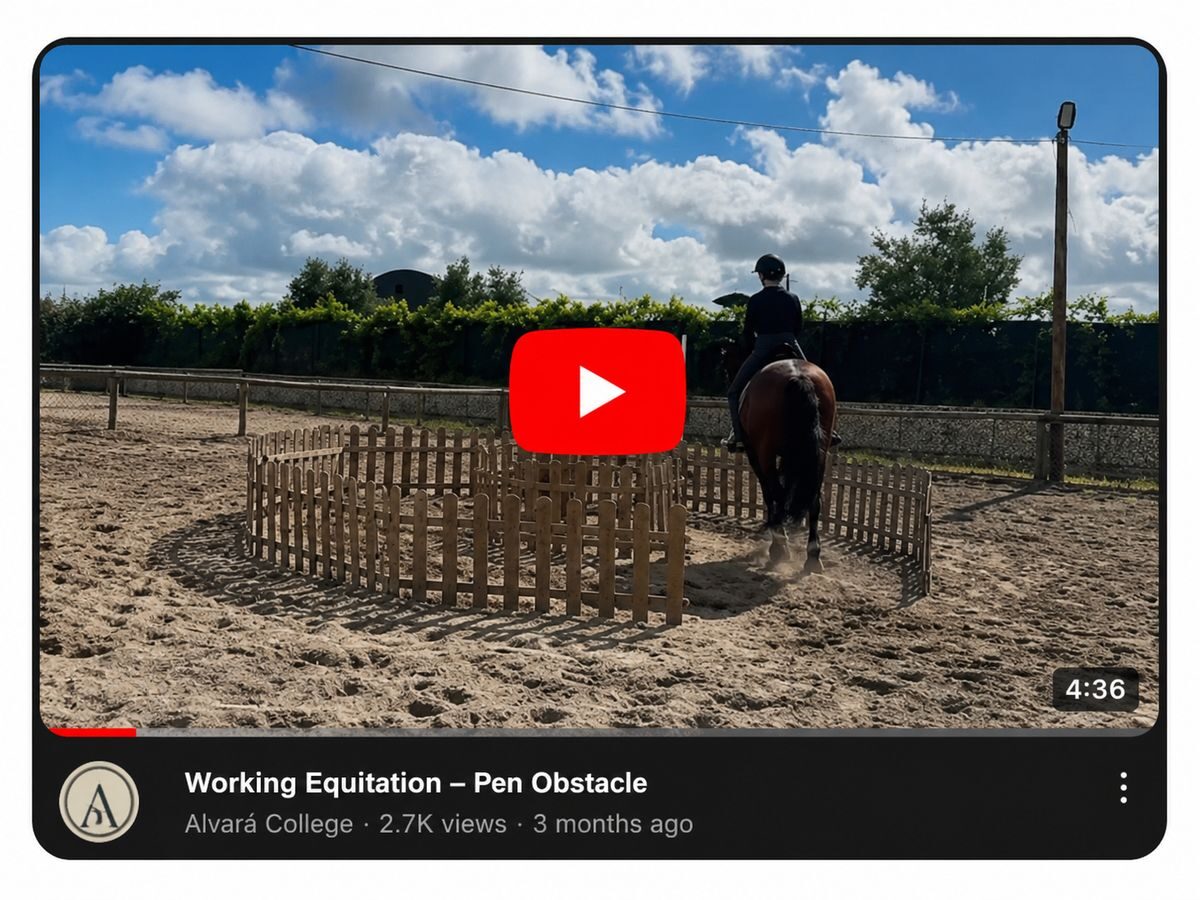
The Member films their own riding at home and sends it in; it is returned with written comment — the correction that carries the rider furthest. One on completing Branch One, then one at the close of each Branch thereafter; at Mentored, read and answered by a Fellow.
More
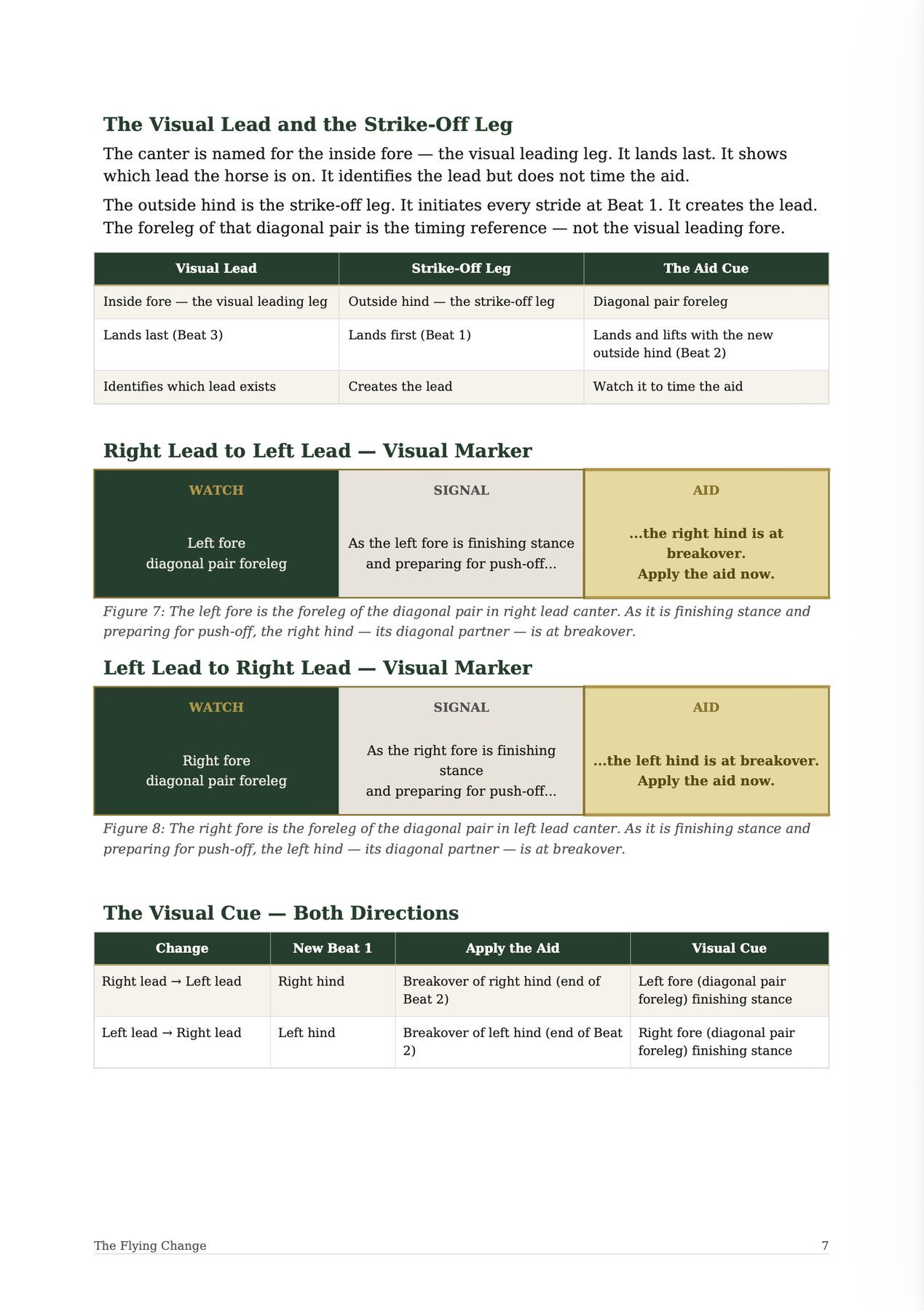
With each examination, where the work was sound and exactly which Articles to return to.
More
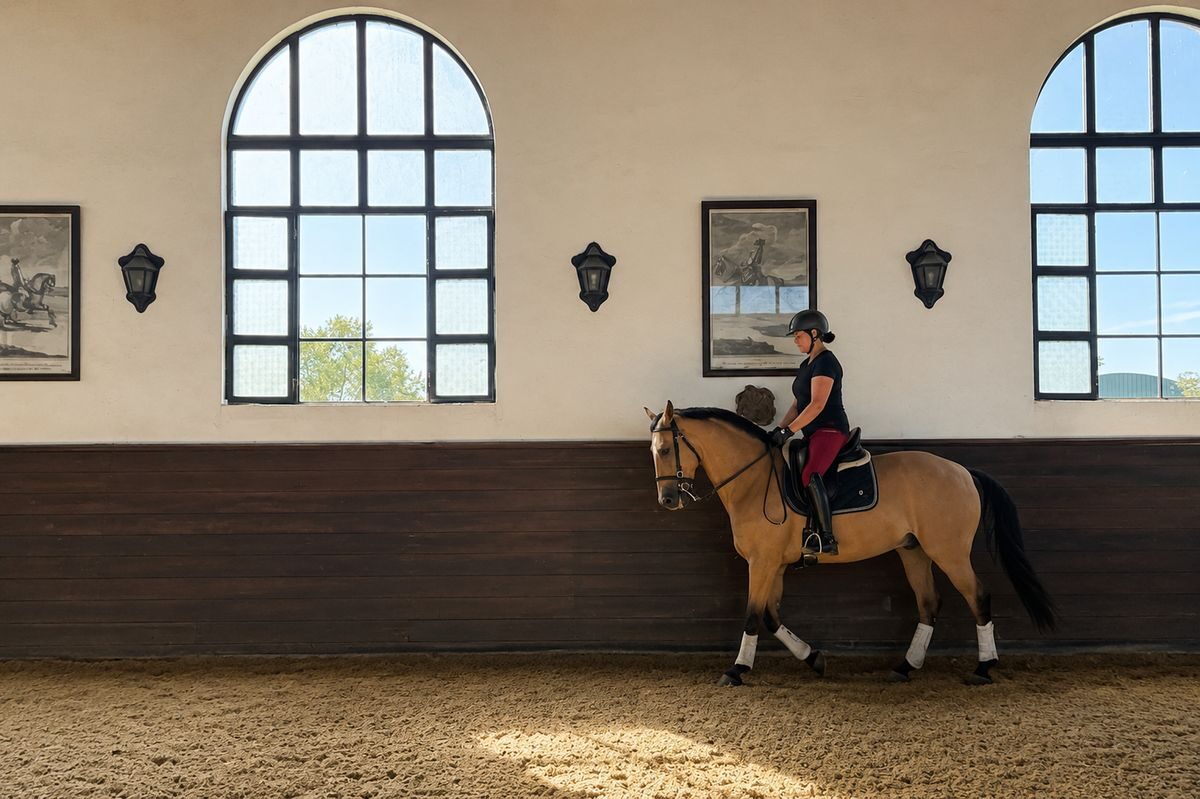
A Fellow teaches live, a horse worked before the room. At Guided, held in the Tuition Archive to study back; at Mentored, joined live with the Fellows, the Member's questions answered as the horse is worked.
More
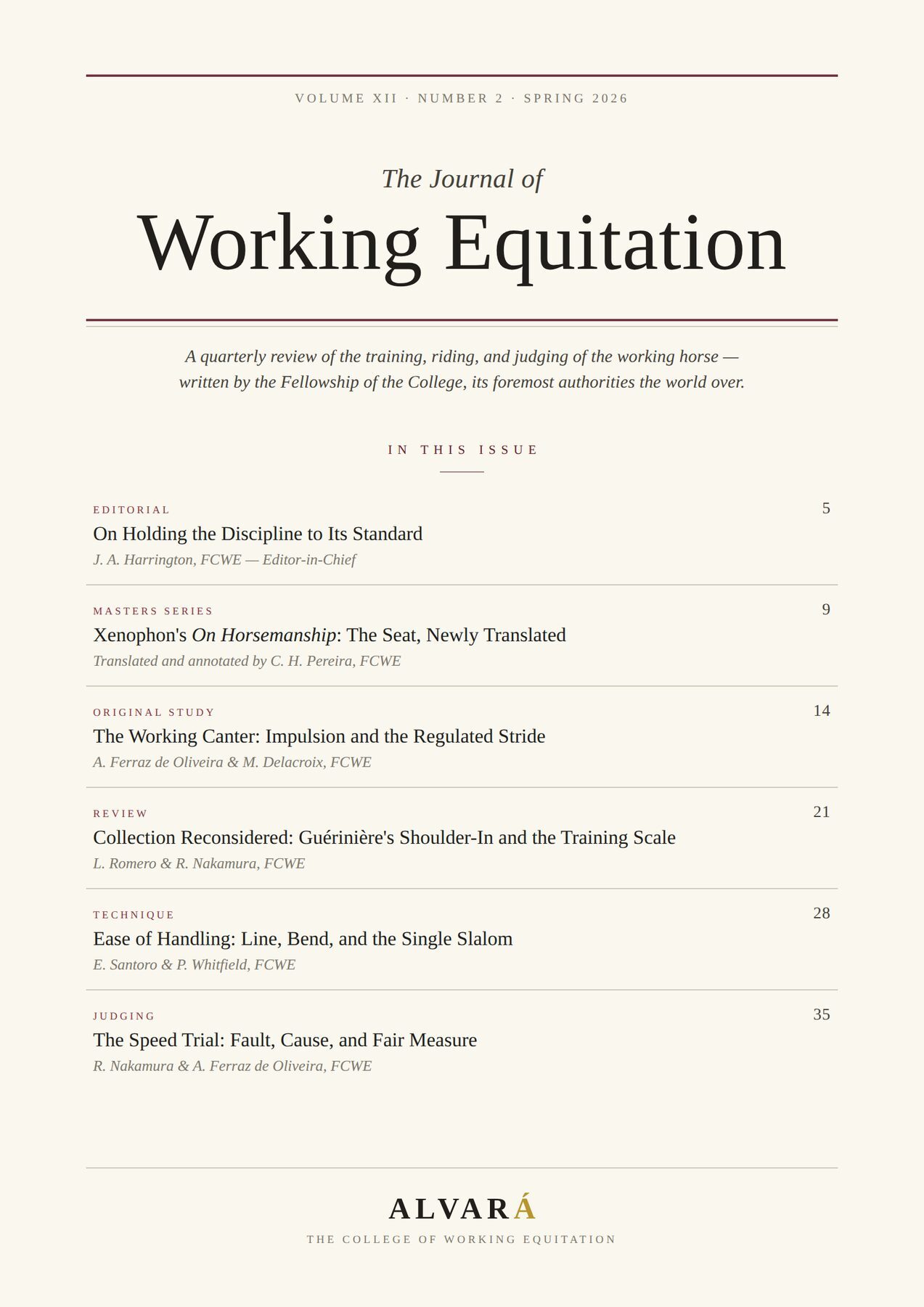
The College's publication — the Fellows' writing, and Members' questions answered. At Guided, to read; at Mentored, to read and to write in and ask the Fellows questions.
More
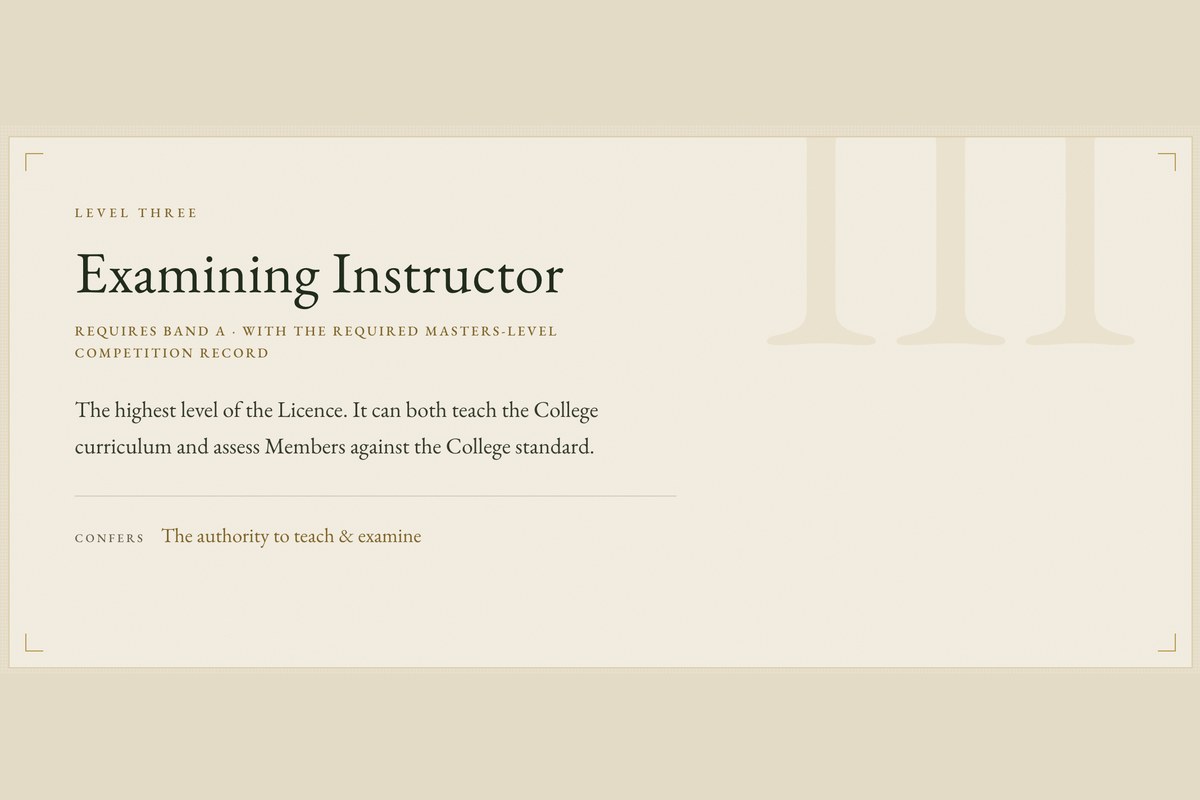
The Instructor's Licence is the College's teaching pathway: Accredited Instructor · Senior Instructor · Examining Instructor. It opens after Branch Three at minimum Band B, for the Member who wants to use their education to teach Working Equitation to others.
More
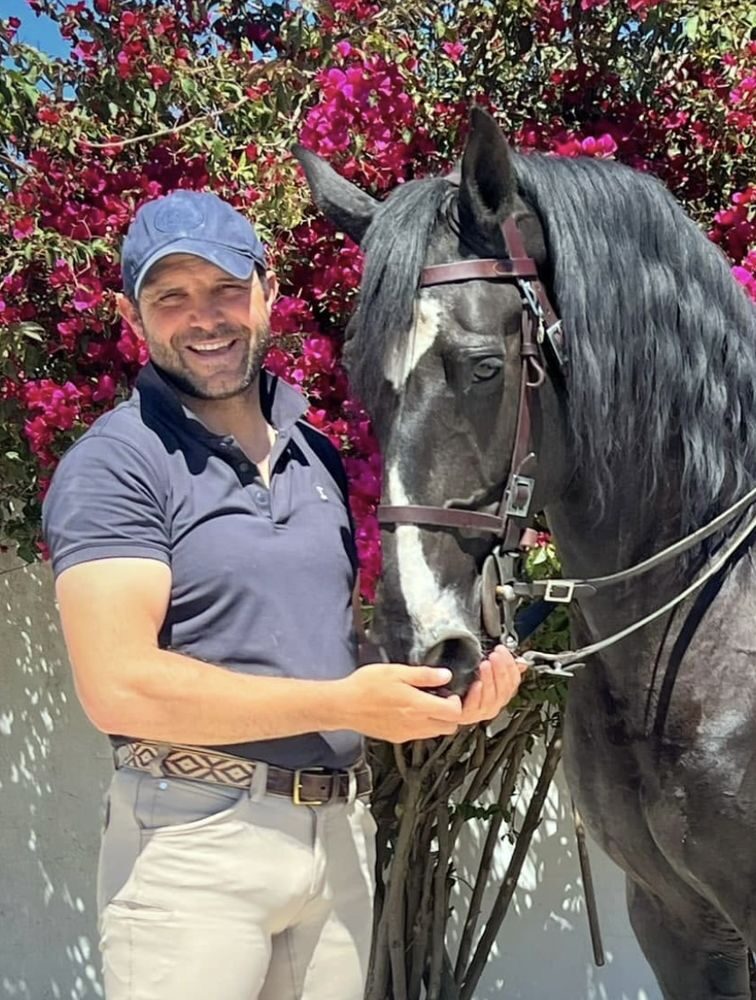
A Fellow travels internationally to the Member's region for in-person training alongside other riders. Opens at Mentored after completion of Branch One at Band B, subject to Fellow availability.
More
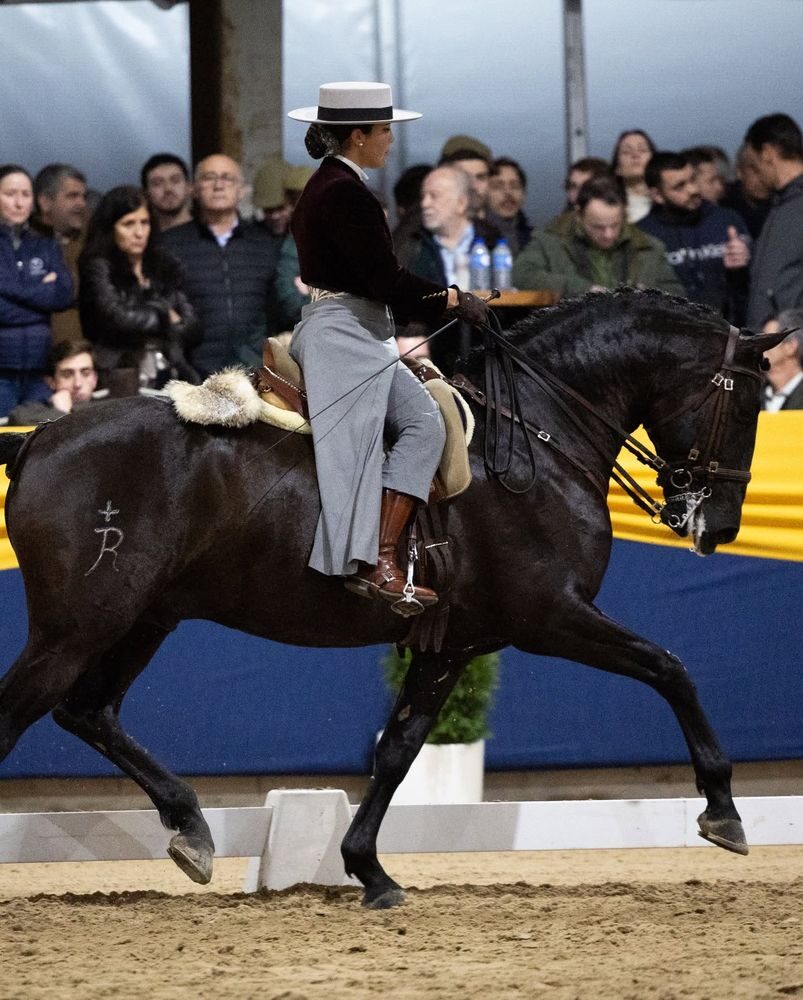
The Residencies take the Member to the founding countries to ride Lusitanos and put their study into practice. Training Residency opens from Guided after Branch One at minimum Band C. Extended Residency opens for Mentored Members at the same point; for Guided Members, it opens after Branch Two at minimum Band C and one Training Residency. Applied Residency opens after completion of Branch Three at Band A.
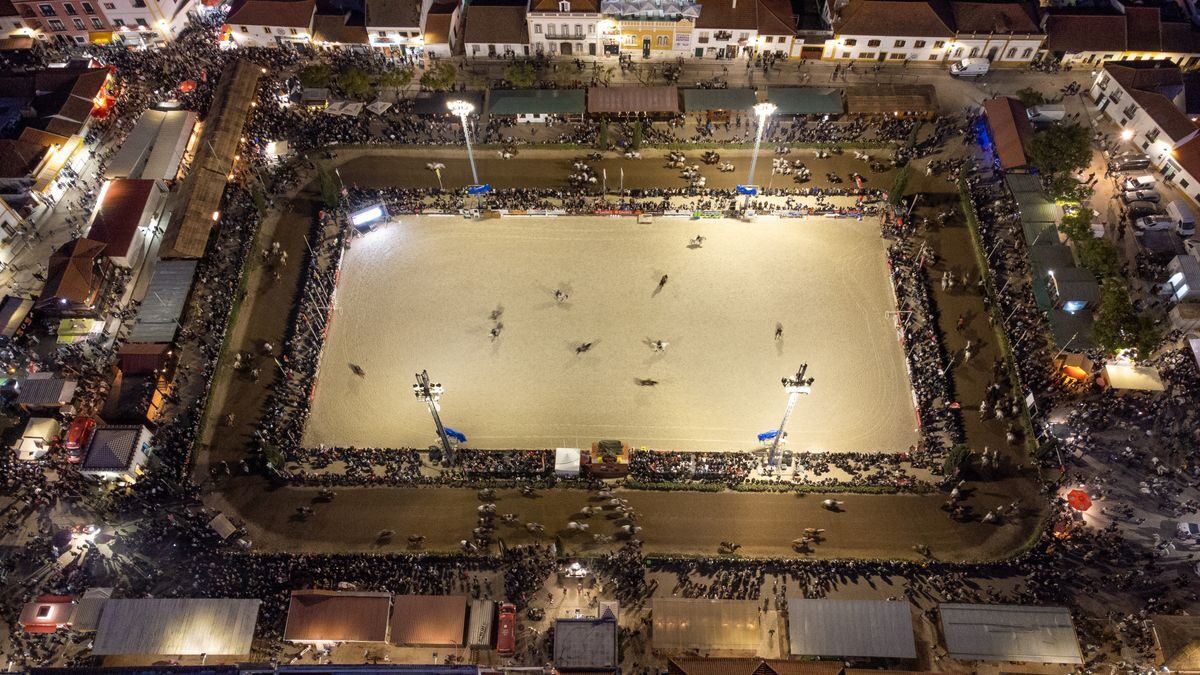
More
For Mentored Members who have completed a minimum of 90 riding days through the Residency pathway over a two-year period and completed Branch Three at minimum Band B, International Competition Opportunities may open in the founding countries on Lusitanos. Opportunities are matched to the rider, horse, standard and places available at the time.
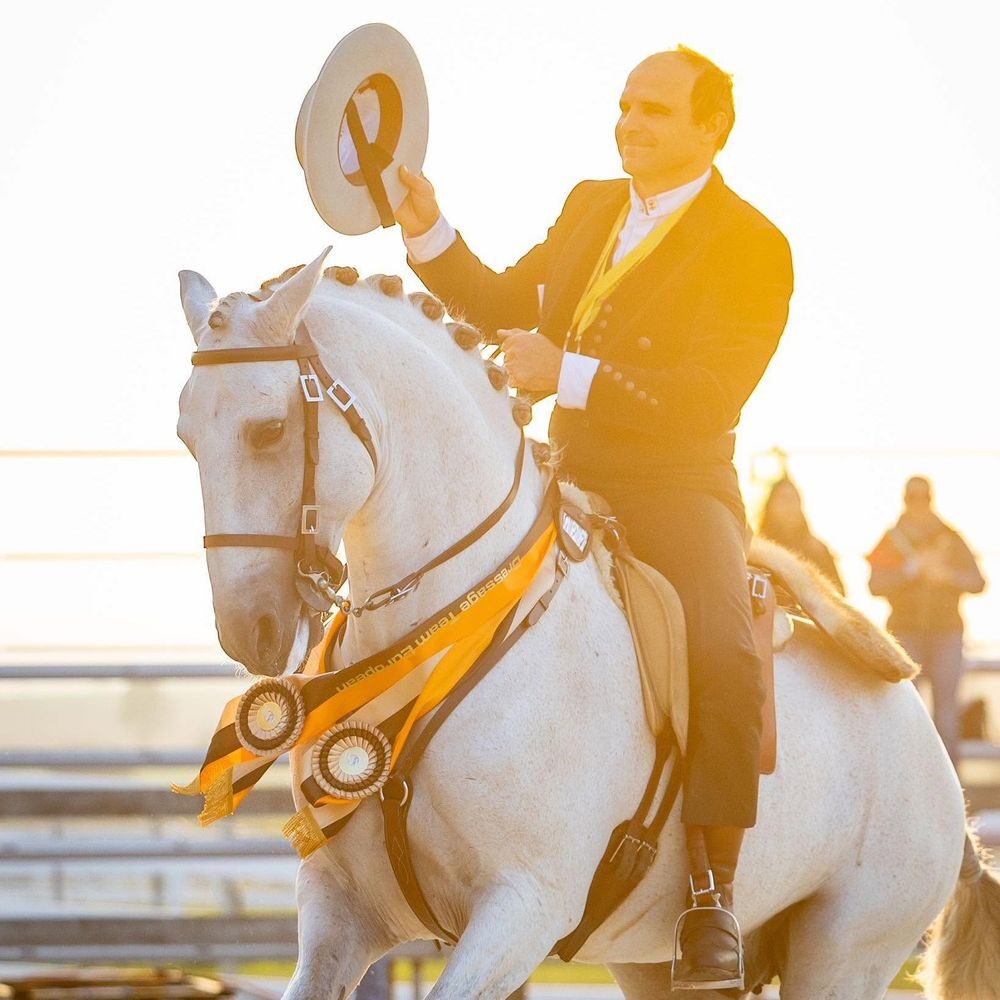
More
The College's highest recognition and office. Fellows are its Guardians of the Sport: preserving the standard, shaping the curriculum and overseeing the Instructor's Licence. The path opens from Guided; admission requires all six standards. On meeting them, the Member carries for life the distinction Fellow of Alvará College (FACWE).
Where Your Study Can Lead
For some Members, the curriculum is exactly what they came for. Others will want to take what they have learned further.
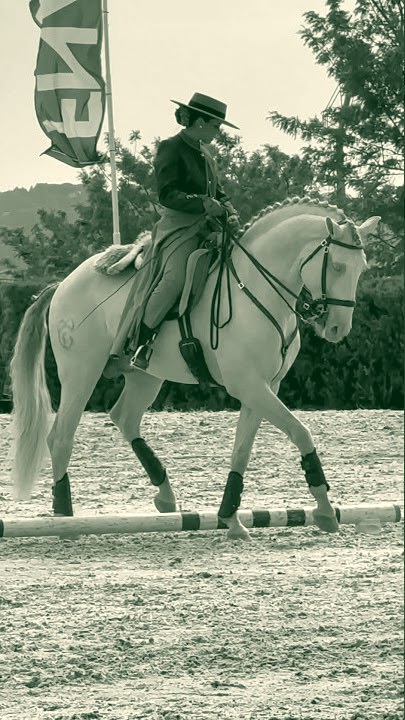
As the Member's knowledge and riding develop, Alvará can open practical training, time with the Fellows, the Residency pathway, the Instructor's Licence, international competition opportunities and, for a very small number, the route towards Fellowship.

Future Intakes
Alvará - The College of Working Equitation · Est. 2026
Its Guardians hold the standard. Its curriculum sets the discipline down in full. The Alvará Fellows carry that knowledge forward, and Membership is where a rider begins to study within it.
Places for the December 2026 intake have now been allocated. Those wishing to become Members of Alvará College may register their interest for a future intake below.
For the Member who wants to study independently, sit the examinations and develop their Bands in their own time.
Adds more of the College around that study: examination feedback, riding reviews, the Journal, live teaching and greater access to the opportunities around the College.
Brings the Fellows directly into the Member’s study and riding, with the closest access the College offers.
Working Equitation must be understood before it can be preserved.
The governing principle of Alvará College