
I · Working Equitation
What is Working Equitation?
Working Equitation as a sport and discipline: its identity, structure, lineage, and governing principles.
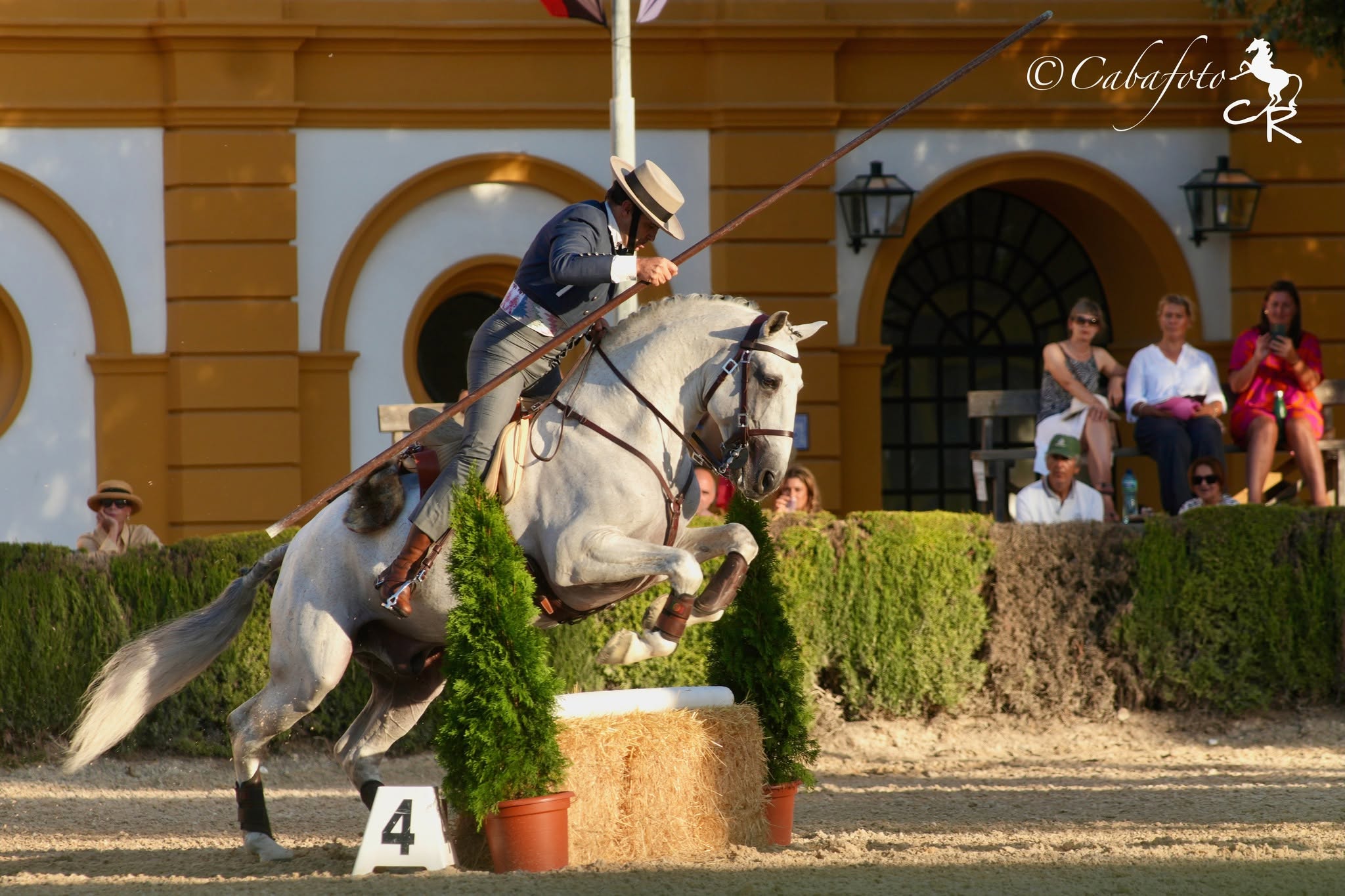
Working Equitation is a sport built on the partnership between horse and rider, and on how fluently that partnership works.
It came out of everyday work. On the cattle estates of Portugal, Spain, France and Italy, riders spent long days in the saddle. They moved cattle, crossed open country, opened gates without getting off, and carried a long pole called the garrocha. To do that work well, horse and rider had to understand each other.
That partnership is what the sport tests.
It tests it in four ways: Working Dressage, Ease of Handling, Speed and Cattle. Each trial puts the same horse and rider under a different kind of pressure, so you see the partnership in a different way.
You see the answer in their fluency. A fluent partnership looks easy. You think of the turn and the horse is already turning. You ask for the halt and the horse halts, square and still. The hands stay quiet. The legs appear still. The aids become harder to see, because the horse understands them so well.
The better the partnership becomes, the less you see the rider having to ask.
I · Where the Sport Came From
Working Equitation began as work, long before it became a sport.
Take the bridge. A working horse had to step onto a bridge and cross it calmly, keeping its footing over the water or the ditch beneath. That is the whole reason a bridge stands in the arena today, and the whole reason it is judged on a calm, sure crossing.
The same is true of the other obstacles. The gate is the farm gate, opened and closed from the saddle so the rider could pass through and keep working. The barrels and the slalom come from the quick, balanced turns a horse needed over open ground.
The rider often had their hands full. A pole in one, a job to do with the other. The horse therefore had to answer the seat and the leg, with very little coming from the rein. Working Equitation keeps that progression towards carrying the reins in one hand.
When you know where a movement or obstacle came from, its place in the sport makes much more sense. The same obstacle may stay with you all the way to Masters, while the standard of riding inside it keeps rising.
II · When It Became a Sport
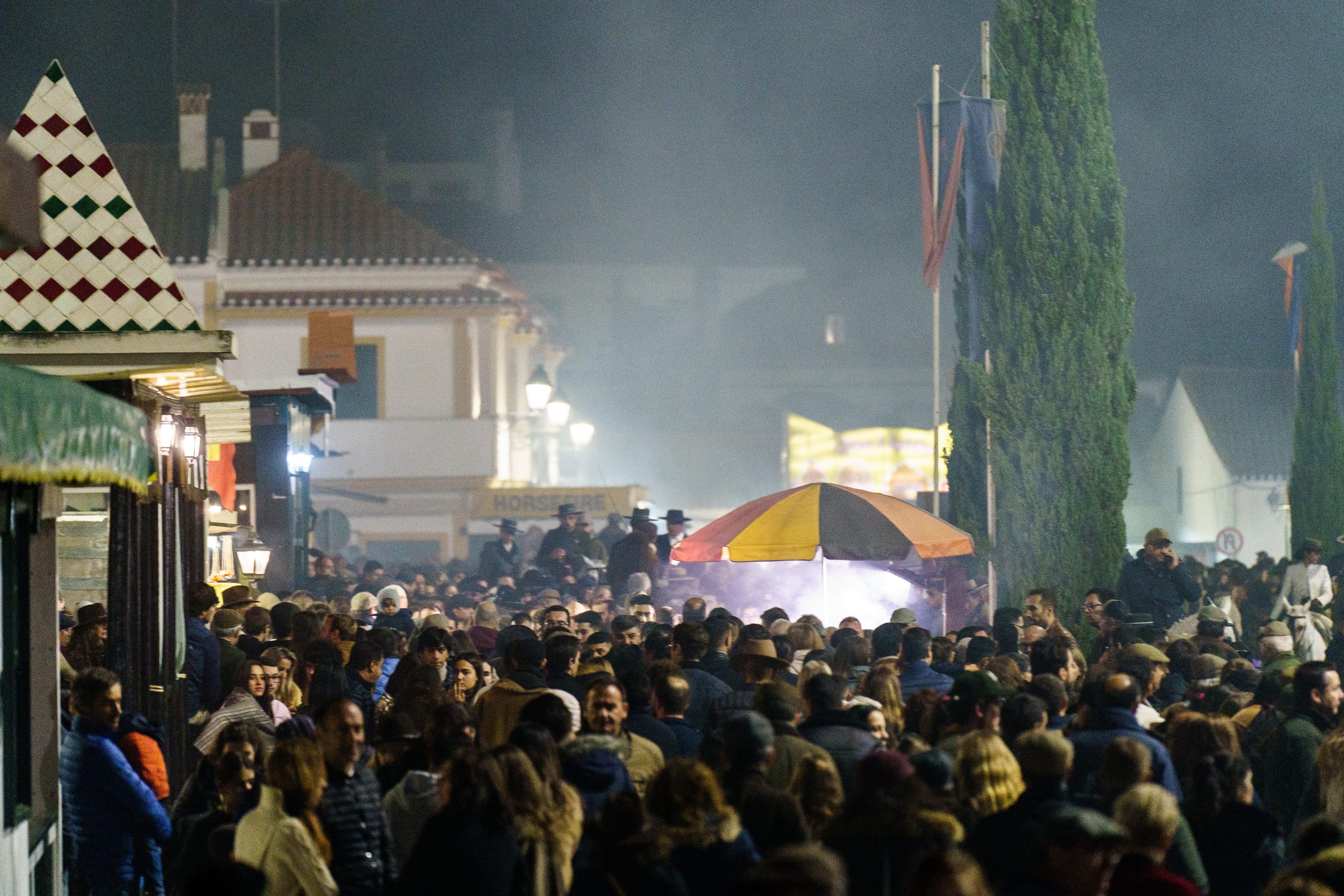
Italy, France and Spain began competing in 1996, and the first European Championship was held in Italy that year. Portugal joined in 1997, with its first competition at Golegã. The first World Championship followed in 2002, at Beja in Portugal.
In 2004 the competing nations formed the World Association for Working Equitation, bringing the countries together under one set of international rules. Its founding president was Portugal's João Ralão Duarte, who still leads it today.
The sport is now ridden in more than thirty-five countries.
The competition is young. The riding behind it is centuries older.
III · The Four Trials
Working Dressage comes first, and it builds the foundation. Horse and rider ride a set sequence of movements in a 20 × 40 m arena in front of a judge. The balance, straightness and control the horse shows here is exactly what lets it ride the obstacles well later.
Ease of Handling is the working day, brought into the arena. A course of obstacles, ridden in order, each one taken from something a working horse actually had to do. A bridge to cross. A gate to open and close from the saddle. A pole to collect, carry and put back. Getting around is only half of it. The judge is watching how it was done.
Speed is the same course, ridden against the clock. Time shows you what the training is really made of. A horse that reads its rider quickly holds its shape when more is asked. A horse that is a beat behind starts to show it.
Cattle takes the partnership back to where the work began. Riders work as a team, each taking a turn to separate their nominated cow from the herd and move it into the designated area while the others hold the rest of the herd. The cow has its own ideas, so none of it can be rehearsed. It needs live cattle, secure ground and a team, so you will meet it mainly at the major international championships.
Read next The four trials of Working Equitation, in full
IV · What the Judge Is Looking For
Four qualities describe the work Working Equitation asks for, and they hold at every level: Rhythmical, Precise, Calm, Fluent.
Rhythmical is the beat of the pace staying true, through every turn, transition and change of balance.
Precise is the horse's answer matching the rider's question: exactly when, exactly where, and exactly to the degree intended.
Calm is the horse keeping the power, speed and agility of an athlete while staying available to its rider. Not quiet. Available.
Fluent is the rider's intention becoming the horse's movement, with nothing in between.
When all four are present, the work starts to look easy.
Read next The Four Governing Principles
V · The Tradition Each Rider Brings
Working Equitation is ridden in more than thirty-five countries, and each one brings its own tradition into the arena, including the dress and the tack that belong to it. A Portuguese rider in the sela portuguesa. A Spanish rider in the silla vaquera. French and Italian riders in the dress of their own working regions.
You see the difference the moment they come in.
Those differences tell you something about where the sport came from. Portugal brought the classical schooling of Doma Clássica together with the working riding of the Ribatejo and the Alentejo. Spain brought Doma Vaquera, the riding of the cattle estates of Extremadura and Andalucía. France brought the Camargue, where riders work black bulls across the wetlands of the Rhône delta. Italy brought the Maremma, and the butteri who rode its hard coastal country.
Read next The four traditions behind the sport
VI · Where One-Handed Riding Comes From
At the top of the sport, the rider carries the reins in one hand.
That comes straight from the work. A rider carrying a garrocha, or working with cattle, needed a hand free. So the horse learned to take its instructions mainly from the seat and the leg, with the rein asking for very little.
Working Equitation keeps the same progression. Early on you ride with two hands and both reins while the horse learns to read the aids clearly. As the training goes deeper and the horse carries itself, the second hand has less to do. At the senior standard the reins are carried in one hand, the curb rein in light contact, confirming what the seat has already asked.
By then, very little should need to happen in the rein.
Read next The garrocha
VII · Inside Alvará - The College of Working Equitation
Inside Alvará College, Working Equitation is studied through the perspective of the Fellows, riders producing this work at the highest international level. Their perspective informs what the College teaches, and its Academic Guardian, a Founding Fellow, oversees and approves every Article before a Member studies it.
That changes how the discipline is studied. A movement, a line or an obstacle is seen through several things at once: the requirement, the quality being produced, the horse underneath it, the preparation that brought the horse there, the working reason behind it and what needs to happen next.
Article 1 begins to apply that perspective to Working Equitation itself. Collection is connected to the horse's ability to shorten, turn and reorganise as the questions come closer together. Impulsion is the power the horse carries into those changes. One-handed riding is studied for what the sport's decision to ask for it says about the discipline.
Article 1 is where College Members begin that study. It sits within Branch One, which looks at the discipline itself and starts to put the Fellows' perspective beside the work. Branch Two moves into how that work is produced in horse and rider. Branch Three takes it into competition.
What you have seen here is one small part of that first Article.
Contents
8 articles in Working Equitation.