
II · Horse & Rider
The Working Equitation Horse and Rider
The training and development of horse and rider: the Structural Training Scale, the Core Riding Skills, position, and tack.
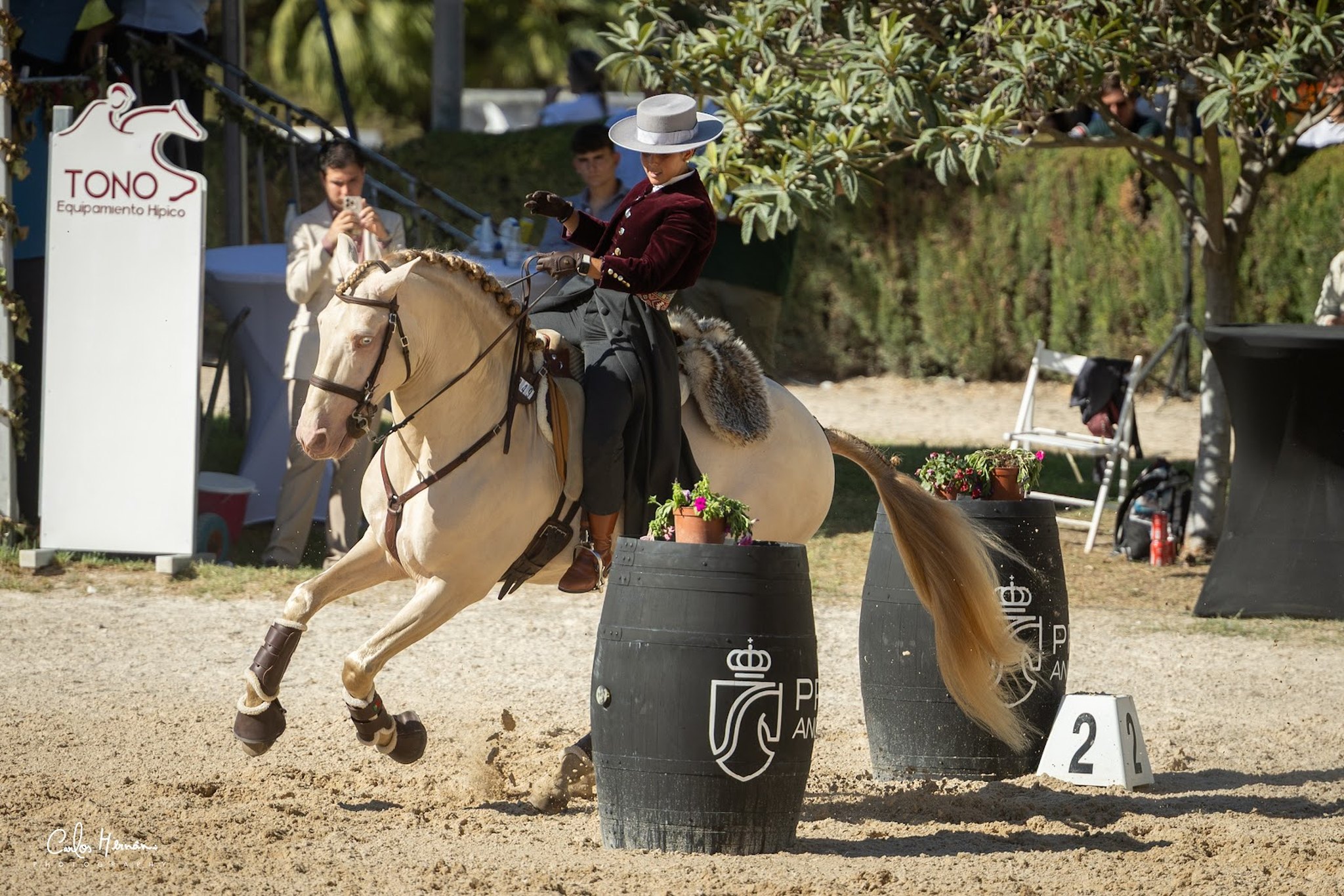
Working Equitation asks two things to develop together. The horse has to become able to carry itself, turn, wait and go forward again without needing to be held together. The rider has to become able to ask for all of that from the seat and leg, with one hand kept for the work.
This part of the Library covers both, and the equipment that sits between them.
I · The Horse
The sport is open to every breed. What it selects for is functional: a horse that can carry more weight behind, rebalance quickly, and repeat that all day without losing its willingness.
You see Lusitanos and Andalusians more than anything else, and there is a practical reason. Both were bred in cattle country for exactly this work. Neither is a requirement.
Read next The Working Equitation horse · The paces
II · How the Horse Is Developed
Alvará teaches the horse's development through the Structural Training Scale, a six-stage framework: Forward Tendency, Symmetrical Alignment, Four-Point Balance, Hindquarter Engagement, Forehand Elevation and Collection.
The order describes dependency. Each stage establishes the conditions the next one needs, and every stage has to stay present as the work gets harder. A collected horse still has to go forward.
Read next The Structural Training Scale · Impulsion
III · The Rider
The rider's body is organised so that each aid can act without disturbing the others, and so that the horse meets the same rider at every task.
Alvará sets out the rider's development through seven Core Riding Skills, in the order they depend on one another: Position, Independence, Balance, Seat, Leg, Hand, Feel.
Read next Horse riding position · The seven Core Riding Skills · One hand
IV · Four Saddles, One Seat
Each founding country built the saddle its work required, and the four look nothing like one another.
Portugal brought the sela portuguesa, deep and high-cantled, from the estates of the Alentejo and the Ribatejo and from the mounted bullfight. Spain brought the silla vaquera, the everyday saddle of the vaquero across the dehesas. France brought the selle gardiane, whose high pommel and cantle close around the rider and whose stirrups are shut at the front so the foot cannot slip through if the horse moves suddenly. Italy brought the bardella of Lazio and the scafarda of the Tuscan Maremma, wide and padded for a day that starts before first light.
Despite their different construction, all four place the rider deep and secure, with a long leg and the weight carried low over the horse's back.
Read next The Spanish vaquera saddle · The Portuguese saddle
V · Four Bridles, One Rein
The bridles developed differently as well. Portugal's cabeçada, Spain's cabezada vaquera with its bocado and mosquero, the plain Camargue headpiece and the butteri bridle worn over a sisal halter are four different forms. At the senior standard, each uses the curb on a light contact.
At the senior standard the reins are carried in one hand, on the curb rein.
Read next The bridle and the bit
VI · The Dress
Riders compete in the working dress of their own country, and the international rules require it. Each nation sends WAWE a written description of its dress and tack in advance.
Read next Dress and turnout
VII · The Movement Comes Second
What we see in the arena is movement. What produces it starts earlier.
A horse turns, shortens, lengthens, changes balance and carries the rider through the work. For College Members, Branch Two begins underneath those visible results, with how the horse is organised to produce them.
The principle is simple: the body comes first. Training develops the organisation of the horse, and the movements reveal what that organisation has produced.
That puts the subjects in this part of the Library into a different relationship. The Structural Training Scale describes the horse's development. The Core Riding Skills describe the rider. Saddles, bridles and the traditions around them influence how the two work together.
Inside the Member curriculum, those subjects begin to meet.
The movement in front of you becomes evidence of what has already happened underneath it. As the study develops, Members learn to read that organisation first, then understand how the riding develops it.
Contents
11 articles in Horse & Rider.