The Portuguese Saddle
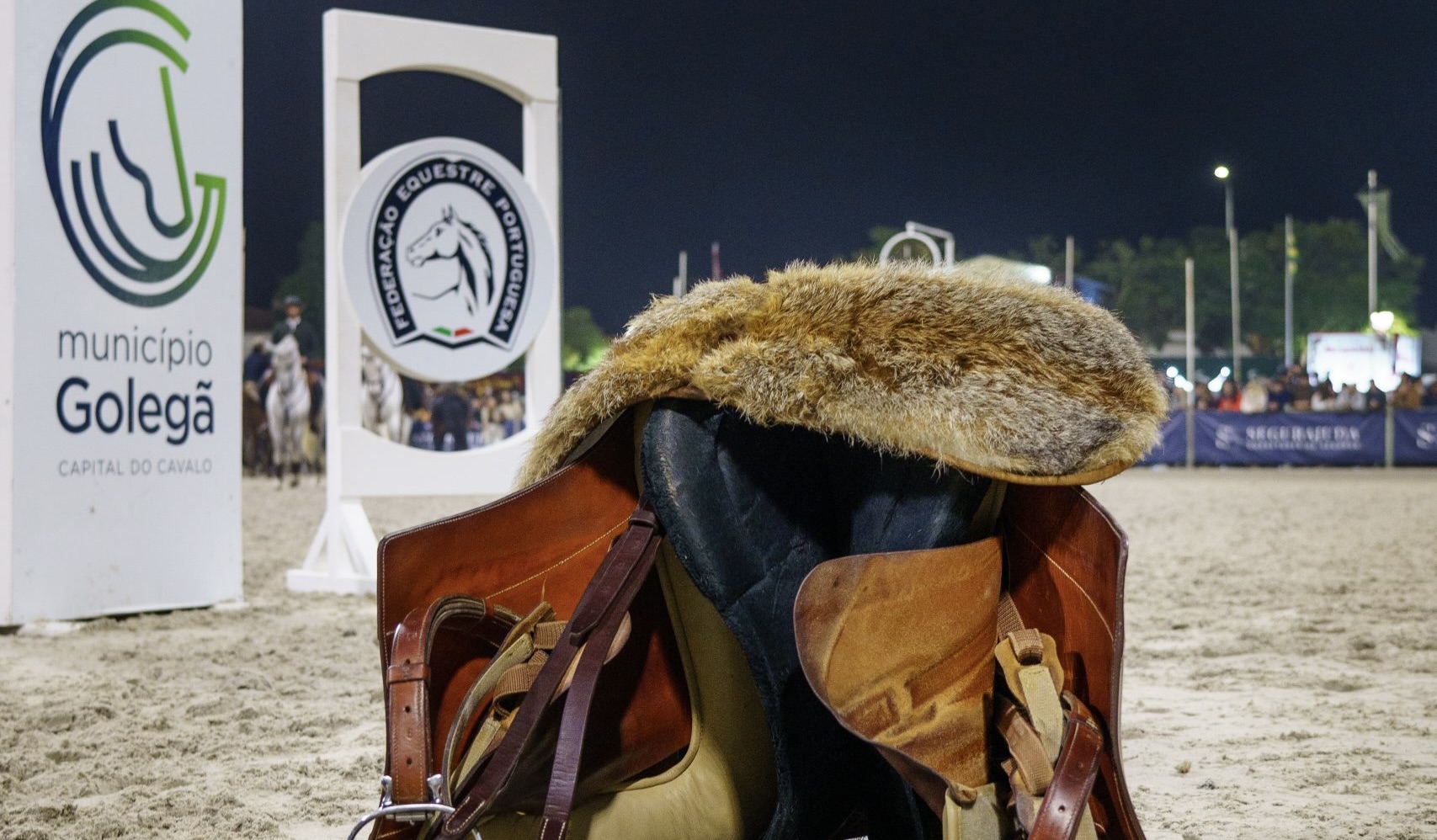
The sela portuguesa is the deep, high-cantled saddle of the Portuguese working estates and of the mounted bullfight. The Portuguese national regulation describes it as the baroque-backed saddle kept among Portuguese riders as the saddle of the bullfight.
It is one of the four national saddles carried into Working Equitation.
I · What Shaped It
The saddle came out of the working estates of the Alentejo and the Ribatejo. Herdsmen there needed to be held secure across long hours: crossing water, managing cattle, working beside bulls, with a pole in one hand and the reins in the other.
The corrida de touros, the traditional Portuguese mounted bullfight, shaped it further. A rider facing a bull on horseback has to be held deep and steady through the horse's sudden movement at close quarters, and the saddle exists to hold him there.
II · What It Does for the Rider
It sits the rider deep and low, with the leg long.
That places the rider deep and stable over the horse's back, with the leg able to hang long. With one hand committed to the work, that position supports the use of the seat and leg.
Read next Horse riding position
III · How It Compares with the Other Three
Set beside the Spanish silla vaquera, the difference in construction is immediate. The sela portuguesa holds the rider through the height and shape of its cantle. The vaquera does it through rye-straw stuffing and hair-filled panels that settle to the individual horse, under a sheepskin seat.
The four saddles differ in construction, but each supports a deep, secure working position with a long leg.
Read next The vaquera saddle, and how all four compare
IV · What the Rules Say
Under the WAWE rules, a competitor rides in the national costume of the country they represent, and the horse is harnessed in that country's manner. Each nation sends WAWE a description of its dress and tack in advance for approval.
The horse itself may be of any saddle breed. The saddle is the country's own.
Tack is fitted and checked so that nothing in it can harm the horse.
Read next Dress and turnout
V · Where It Belongs
Doma Clássica is the classical riding tradition of Portugal, and it stayed closely connected to the cattle estates and to the mounted bullfight rather than drawing apart from working riding. The saddle belongs to that tradition.
Read next Doma Clássica
VI · Fit Changes the Conversation
The shape of the sela portuguesa tells us a great deal about the riding tradition that produced it. For horse and rider, the next question is how that shape works when the saddle is actually fitted.
A saddle sits between two moving bodies. Its relationship with the horse's back affects the place from which the rider has to balance, follow and use the seat.
For College Members, that makes fitting part of the riding as well as an equipment decision.
The deeper study looks towards the relationship between the horse's back, the saddle and the rider above it. A change in fit changes how those three meet, and therefore changes the information the rider receives through the seat.
That gives the traditional saddle another layer of meaning. Its history explains its shape. Its fit determines how that shape meets the individual horse.
The history explains why the saddle has its particular shape. Branch One establishes the saddle, its construction and the tradition it belongs to, and Branch Two takes Members into the fitting relationship between saddle, horse and rider. What the later study asks is how that shape belongs on the individual horse.